Contact Us To Schedule Service
Distribution operations run their forklifts harder than almost any other industry. High-cycle PM scheduling, electric fleet specialization, and peak-season planning built around how distribution centers actually operate. Servicing warehouses and DCs across the Austin-to-San Antonio corridor since 1993.
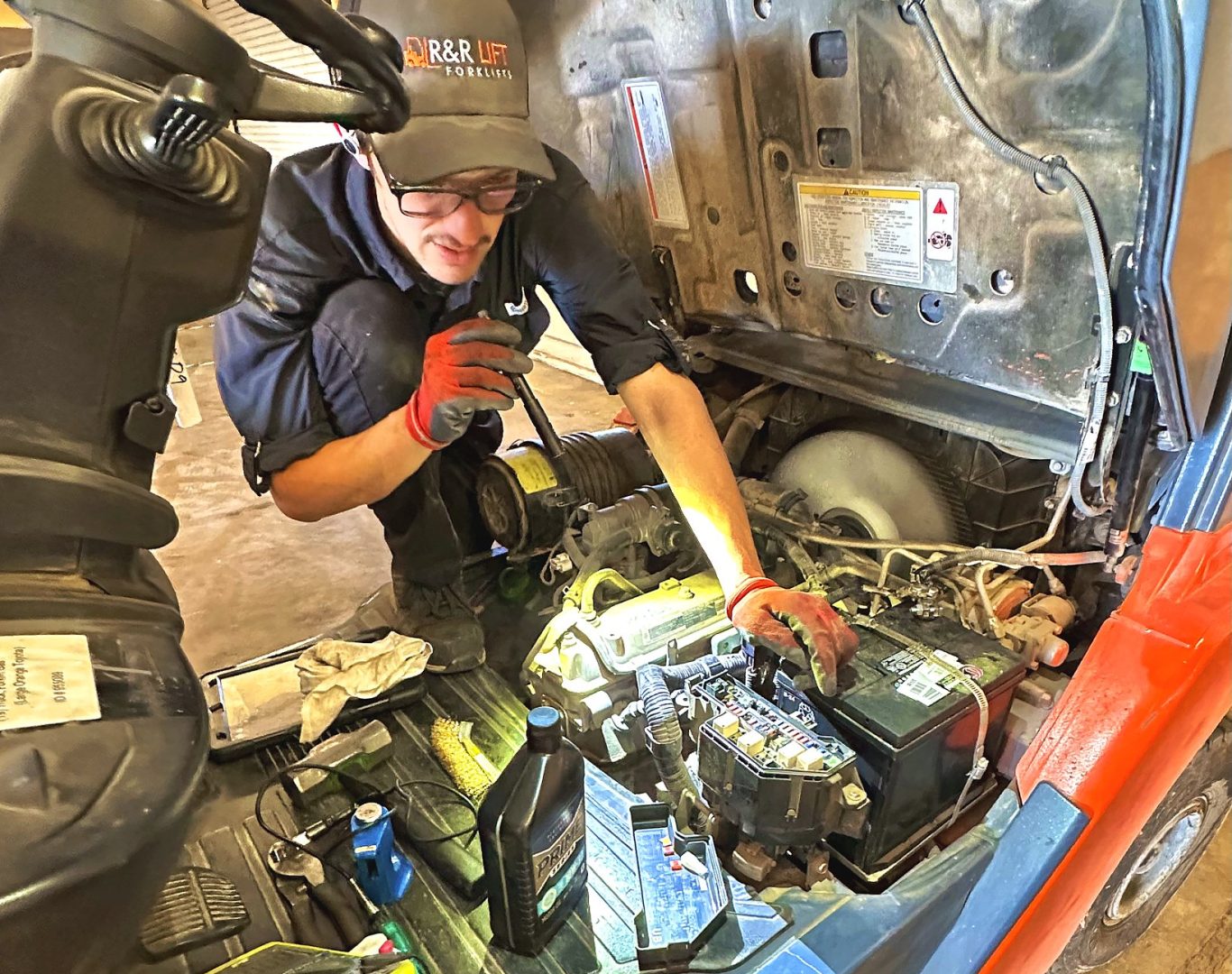
Distribution centers run forklifts harder, more continuously, and with tighter uptime requirements than almost any other industry. A forklift in a distribution operation might run two or three shifts a day, six or seven days a week, cycling pallets through receiving, putaway, replenishment, picking, and shipping continuously. That usage profile changes everything about how the fleet should be maintained.
Three things make distribution forklift service distinct:
A service approach built for a single-shift manufacturing operation running IC trucks doesn’t fit a multi-shift distribution center running electric equipment. The PM cadence, the fleet expertise, and the uptime priorities are all different.
For distribution fleets running multi-shift, PM scheduling is built around actual hour-meter accumulation rather than calendar intervals. We track hour meters across the fleet and schedule PM visits when machines actually hit their thresholds, which in a high-cycle operation comes up more frequently than a calendar schedule would suggest.
PM visits get scheduled around the operation's rhythm: during shift changes, scheduled maintenance windows, or off-peak periods, so the maintenance doesn't interrupt the material flow. For operations running close to 24/7, this coordination is essential. The maintenance has to happen without stopping the operation.
Distribution fleets are electric-heavy, and electric forklift maintenance has its own focus areas. Battery system health (for lead-acid and lithium systems), charger function, motor controller diagnostics, and the electrical systems that IC fleets don't have. Our PM scope for electric equipment covers these systems thoroughly, because in an electric distribution fleet, battery and electrical issues are among the most common causes of unplanned downtime.
High-density distribution operations run narrow-aisle equipment: reach trucks, double-reach trucks, turret trucks, and order pickers. This equipment has maintenance requirements specific to its design, including the mast and reach mechanisms that standard counterbalance trucks don't have. Our team services narrow-aisle equipment across the brands common in Central Texas distribution (Crown, Yale, Toyota, and others).
Distribution operations have seasonal peaks, especially operations serving retail and e-commerce, where the period from late summer through the holiday season is critical. The worst time for a forklift to go down is during peak season when the operation is running at maximum capacity. We build PM scheduling around seasonal peaks, intensifying preventative attention before the peak so the fleet enters the high-volume period in the best possible condition, and ensuring critical machines aren't due for major PM during the peak window.
Distribution operations often have significant compliance and audit requirements, including OSHA compliance and customer or corporate audit standards. Our program documentation covers the fleet maintenance records these audits require, structured so they can be produced on demand without scrambling.
The economic case for proactive maintenance is sharpest in distribution because the downtime cost is high. When a distribution forklift goes down mid-shift, the cost isn’t just the repair. It’s the operational impact: operators idled, material flow backed up, downstream processes delayed, and in peak season, potentially missed shipping commitments.
For most Central Texas distribution operations, the fully-loaded cost of an unexpected forklift outage runs $300 to $500 per hour, and higher during peak season when the operation has no slack to absorb disruption. Multiply that by the frequency of unplanned breakdowns across a fleet running reactive maintenance, and the annual downtime cost becomes a significant number, often larger than the cost of a thorough maintenance program on the same fleet.
The distribution-specific point: because distribution forklifts run hard and uptime sensitivity is high, distribution operations have more to gain from proactive maintenance than almost any other industry. The thorough-PM economics that favor proactive maintenance generally are even stronger in a high-cycle distribution environment.
We service distribution and warehouse forklift fleets across the major industrial submarkets:
For distribution operations in any of these areas, our team services your facility as part of regular weekly operations, with PM scheduling built around your operation’s cycle.
Yes. For multi-shift distribution operations, we schedule PM visits during shift changes, scheduled maintenance windows, or off-peak periods so the maintenance doesn’t interrupt operations. For high-cycle operations running close to 24/7, PM coordination is built into the program from the start.
Yes. Distribution fleets are electric-heavy, and our PM scope for electric equipment covers battery systems, charging systems, motor controllers, and the electrical systems thoroughly. Battery and electrical issues are among the most common causes of unplanned downtime in electric distribution fleets, so they get careful attention.
Yes. For operations with seasonal peaks (retail and e-commerce distribution especially), we build PM scheduling around the peak: intensifying preventative attention before the peak so the fleet enters the high-volume period in good condition, and avoiding major PM during the peak window when the operation has no slack.
Yes. High-density distribution operations run reach trucks, double-reach trucks, turret trucks, and order pickers, and our team services this equipment across the brands common in Central Texas distribution.
Distribution centers run their forklifts harder than almost any other industry, with tighter uptime requirements and electric-heavy fleets that need specialized maintenance attention. A service approach built for that reality, with high-cycle PM scheduling, electric fleet expertise, and peak-season planning, keeps your material flowing without the unplanned outages that back up the whole operation.
If you run a distribution center or warehouse fleet in Central Texas, we'd be happy to walk your operation and show you what a program built around your usage profile would look like. No cost, no commitment.