OSHA’s forklift requirements are often misunderstood. The regulation covers operation, training, and maintenance together. Most explanations either recite the regulation word for word, which doesn’t help, or oversimplify it, which misleads. For a fleet operations manager, the practical questions are simpler than the regulation makes them seem. What does OSHA actually require for forklift maintenance? What will an inspector ask to see? How do you stay compliant without turning it into a separate project?
This guide answers those questions in practical terms. It covers what OSHA’s forklift standard (29 CFR 1910.178) requires for maintenance and inspection, what documentation matters, what inspectors look for, and how a maintenance program satisfies these requirements as a byproduct of good fleet management rather than as separate compliance work.
This is practical guidance, not legal advice. For authoritative regulatory text, OSHA’s own published standards are the source. Here we give you the operational translation: what compliance looks like in practice for a working fleet.
What OSHA’s forklift standard covers
The scope of 29 CFR 1910.178
OSHA’s primary forklift standard, 29 CFR 1910.178 (Powered Industrial Trucks), covers the design, operation, maintenance, and use of forklifts and similar powered industrial trucks. The standard addresses several areas:
- Operator training and certification
- Safe operation requirements
- Inspection requirements
- Maintenance requirements
- Specific requirements for different truck types and operating environments
For maintenance compliance, the most relevant parts are the inspection and maintenance provisions. They establish what you must do to keep forklifts in safe operating condition.
The two maintenance obligations
OSHA’s maintenance requirements for forklifts come down to two core obligations:
Daily or pre shift inspection. OSHA requires that forklifts be examined before being placed in service, and that this examination happen at least daily (or after each shift when trucks are used around the clock). You must address defects found during inspection before the truck is used. This is an operator responsibility, performed at the start of each shift.
Maintenance to safe operating condition. OSHA requires that forklifts found to be in need of repair, defective, or in any way unsafe be taken out of service until restored to safe operating condition. This establishes the obligation to actually maintain the equipment, not just inspect it.
The regulation doesn’t prescribe a specific PM schedule (every X hours, every Y months). It establishes the obligation to keep equipment in safe operating condition and to inspect it regularly. The employer decides how to meet that obligation, including the PM cadence and the inspection scope, guided by manufacturer recommendations and operating conditions.
The daily inspection requirement
What the daily inspection covers
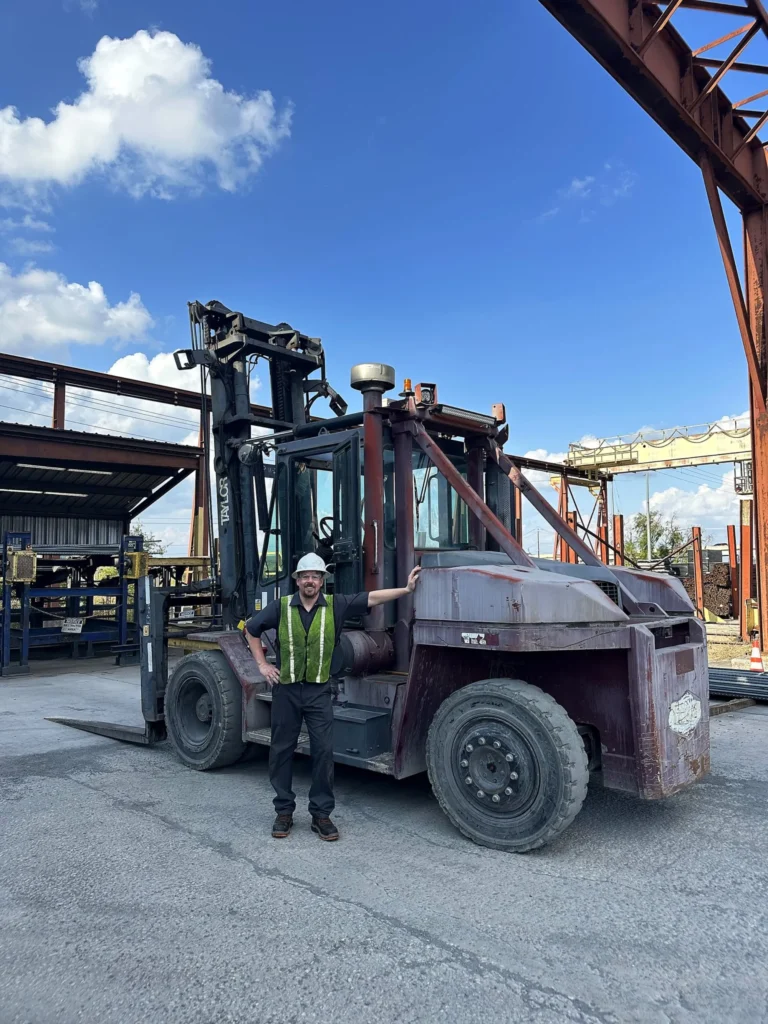
The pre shift inspection is an operator responsibility, and it’s the most frequent OSHA required maintenance activity. A compliant daily inspection covers the items that affect safe operation:
- Tires and wheels
- Forks and mast
- Hydraulic systems and visible leaks
- Brakes
- Steering
- Lights, horn, and backup alarm
- Operator restraint (seatbelt) and overhead guard
- Fluid levels
- Battery (electric) or fuel system (IC)
- Warning lights and gauges
- Any unusual sounds, vibrations, or performance issues
The inspection should be quick, a few minutes, but thorough enough to catch obvious safety issues before the truck goes into service. Different truck types and fuel types have slightly different checklists, and OSHA expects the inspection to fit the equipment.
Documenting the daily inspection
OSHA requires the daily inspection but doesn’t mandate a specific documentation format. In practice, though, we strongly advise documenting every daily inspection. A daily inspection log, on paper or digital, records who inspected each truck, when, and what they found. It is the evidence that the inspection actually happened.
Without documentation, “we inspect daily” is a claim nobody can verify. With documentation, it’s a demonstrable practice. When an inspector or an insurance carrier asks whether daily inspections are happening, the log is the answer.
Where daily inspection intersects with the maintenance program
The daily inspection is an operator responsibility, separate from the scheduled PM that a maintenance program provides. But the two intersect. When operators flag issues during daily inspections, those issues feed into the maintenance workflow. A well run program has a clear path from “operator flagged an issue during the pre shift inspection” to “the issue gets addressed,” with documentation tying the two together.
A maintenance program doesn’t replace the daily inspection. That’s still the operator’s job. The program provides the repair and documentation structure that makes the daily inspection requirement work. Operators catch issues daily, and the program resolves them.
The scheduled maintenance requirement
What “safe operating condition” requires in practice
OSHA’s requirement to maintain forklifts in safe operating condition is the basis for scheduled preventative maintenance. OSHA doesn’t prescribe a specific PM schedule. In practice, meeting the obligation means following a maintenance program guided by manufacturer recommendations and operating conditions.
Manufacturers typically recommend PM at hour meter intervals (commonly 200, 1,000, and 2,000 hours). Following manufacturer recommendations is the defensible standard for showing that you maintain equipment in safe operating condition. An operation that follows manufacturer recommended intervals, documents the work, and addresses issues found during inspection is meeting OSHA’s maintenance obligation.
What inspectors actually look for
When an OSHA inspector evaluates forklift maintenance compliance, they generally look for evidence of a few things:
- Daily inspections are happening and documented. The daily inspection log is usually the first thing requested.
- Defective equipment is taken out of service. Evidence that trucks flagged with safety issues were actually removed from service until repaired.
- A maintenance program exists and is followed. Records showing scheduled PM is happening at reasonable intervals.
- Repairs are documented. Service records showing that issues found were actually addressed.
- Operators are trained and certified. This is the training requirement rather than maintenance, but inspectors often review it alongside maintenance records.
The throughline is documentation. OSHA compliance for forklift maintenance is substantially a documentation question. The maintenance has to happen, but proving it happened is what satisfies an inspector. That proof comes from inspection logs, service records, and repair documentation.
The cost of noncompliance
OSHA forklift violations are among the more commonly cited standards in general industry inspections. Penalties vary by violation severity and by whether the violation is classified as serious, willful, or repeat. Beyond the direct penalties, a forklift safety incident that results from inadequate maintenance carries far larger costs: injury liability, workers’ compensation impact, operational disruption, and potential litigation.
The practical point: OSHA compliance for forklift maintenance isn’t just about avoiding citations. It’s about the documentation and maintenance discipline that prevents the incidents that cause much larger costs.
How a maintenance program satisfies OSHA requirements
Compliance as a byproduct of good fleet management
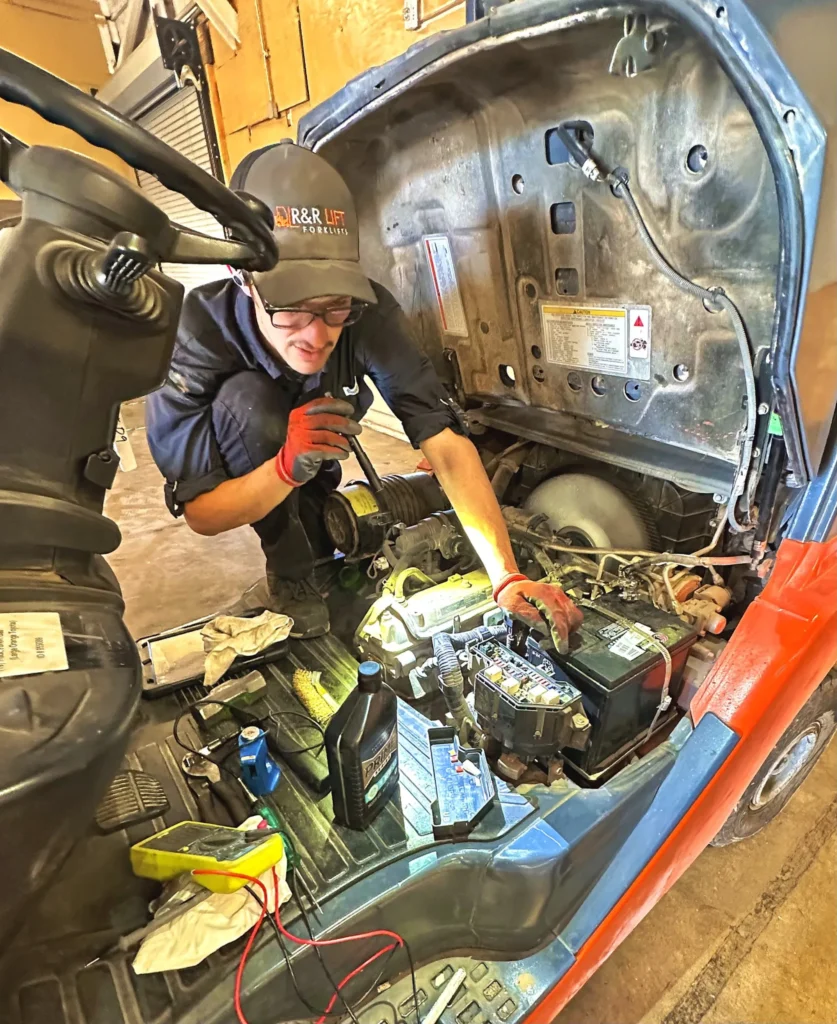
The most efficient way to satisfy OSHA’s forklift maintenance requirements is to run a maintenance program that produces compliance as a byproduct. Don’t treat compliance as separate work.
A well structured fleet maintenance program satisfies the OSHA maintenance obligations because:
- Scheduled PM at manufacturer recommended intervals demonstrates maintenance to safe operating condition
- Documented service records provide the evidence inspectors look for
- Issue tracking from inspection to resolution demonstrates that defective equipment is addressed
- Documentation across the whole fleet makes compliance records available on demand
When the program is doing its job, OSHA compliance documentation is just a view into the records the program already produces. You aren’t doing compliance work on the side. You’re running good fleet maintenance, and the compliance documentation comes with it.
What the program doesn’t cover
To be clear about the boundaries: a maintenance program covers the scheduled maintenance and the repair documentation. It doesn’t cover the operator daily inspection, which is the operator’s responsibility. It also doesn’t cover operator training and certification, which is a separate OSHA requirement.
A complete OSHA compliance picture requires:
- Daily inspections by operators (an operator responsibility, supported by the program’s repair process)
- Operator training and certification (a separate requirement, often handled by the employer or a training provider)
- Scheduled maintenance and documentation (what the maintenance program provides)
The maintenance program handles the third piece and supports the first. The training piece is separate. Knowing which pieces the program covers helps you make sure the others are handled.
Documentation that’s ready when asked
The practical test of OSHA maintenance compliance is whether you could produce complete, current documentation if an inspector asked tomorrow. A maintenance program with proper documentation passes this test by default. The service records exist, the PM schedule is documented, the repair history is on file, and the fleet reports tie it together.
Operations running reactive maintenance without documentation fail this test. They might be doing adequate maintenance, but without records they can’t prove it. “We maintain our equipment” doesn’t satisfy an inspector without documentation.
How R&R handles OSHA compliance
Compliance documentation in the program
For fleet program customers, OSHA relevant documentation is part of the standard program output. Every PM visit produces a service record. We document every repair. The monthly fleet report consolidates the maintenance history across the fleet. This documentation is structured so you can produce it for OSHA inspections, insurance audits, and internal compliance review without reformatting.
We also handle the periodic inspection requirements as part of the program, with documentation on file and ready to produce when asked. Running LPG units? We handle that compliance as part of the program as well.
What we help with and what stays your responsibility
We provide the scheduled maintenance, the inspection documentation, and the repair records. We support the daily inspection requirement by resolving the issues operators flag.
We don’t provide operator training and certification. That’s a separate requirement you’ll handle through an employer program or a training provider. The daily pre shift inspection also remains an operator responsibility. We state this boundary plainly so you can make sure the pieces we don’t cover are handled.
OSHA compliance for forklift maintenance is mostly a documentation question.
The maintenance has to happen, but proving it happened is what satisfies an inspector. An operation running scheduled maintenance at manufacturer recommended intervals, documenting the work, and addressing issues found during inspection is meeting OSHA’s maintenance obligation. The challenge for most operations isn’t doing the maintenance. It’s keeping the documentation current and ready to produce.
A fleet maintenance program solves the documentation problem as a byproduct of good fleet management. If you want compliance documentation that’s ready when an inspector asks, without running compliance as a separate project, that’s part of what a program with us provides. Call 512-256-5312 or use the form at /contact/ and we’ll walk through your current compliance posture with you.
This guide is practical operational guidance, not legal advice. For authoritative regulatory requirements, consult OSHA’s published standards or a qualified compliance professional.